At my first professional librarian position I sat in a cubicle in the basement, near the loading dock. The office had a megaphone in case we needed it for an earthquake emergency. The office I’m in at LMU is much, much nicer. Also, no megaphone.

At my first professional librarian position I sat in a cubicle in the basement, near the loading dock. The office had a megaphone in case we needed it for an earthquake emergency. The office I’m in at LMU is much, much nicer. Also, no megaphone.
Happy birthday, ERM! Two years ago today we met our trainer from Innovative Interfaces to set up the new module that would help us manage our growing collection of electronic resources. Here we are, two years later, with a fully developed module that integrates seamlessly with our catalog and provides our patrons with rights & restrictions information about e-resources in a proactive way.

(via http://www.alegriphotos.com/Two_year_candle_on_birthday_cake-photo-c14e4f986fe8930683dd4cc4d9d30be3.html)
And many mooooooore…
Sometimes my job is all about the small things. For example, I am sometimes asked how much we spend annually in access fees for e-content. Access fees (or “hosting fees”) are charged by a vendor once you have purchased e-content but want to continue viewing the content on a third-party platform rather than hosting it yourself. You’re asking yourself, “Who would want to host a bunch of disparate content on their own? Of COURSE we would want the vendor to keep all those e-books/e-journals/databases on the existing platform.” I know, it’s nutty. It’s also expensive. Sometimes we pay thousands of dollars to access content we’ve already bought. The library world is a strange place.
So, how much do we spend on all this stuff annually? I’ll tell you next year. We just created a fund code for Access Fees and I’m in the process of creating new order records that are tied to this fund. At the end of the year I’ll be able to run a report that shows how much money we spent in that fund. Hooray!
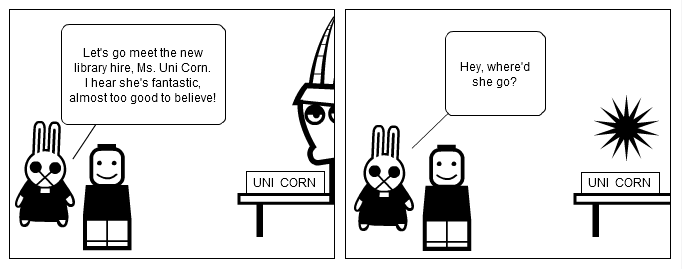
inspired by the conversation on friendfeed about the nearly impossible qualities a library is looking for in a new hire: http://friendfeed.com/lsw/8c3f8c41/my-kingdom-for-e-resources-librarian
in the last 3 years of my work experience i’ve brought an e-resources management system to fruition, started a perpetual access inventory project, am in the middle of a thorough review of license agreements, tried a new usage statistics reporting system, and organized our order records for maximum ease for other kinds of reporting. dude, i’m tired. i’m also wondering what happens next. we’re *so close* to having a functional, easy workflow with quality people appropriately trained to do the heavy load of work required for the management of e-resources. what happens then? what will we be prompted to think about when the big technical problems have been resolved? how have you addressed this at your own institution? have you been able to think about this at all?
the e-resources world is a fragile ecosystem because we rely so heavily on a variety of data sources (e-journal and e-book MARC records likely come from different suppliers, holdings information from possibly another supplier) and services (openURL, statistics reporting), and having those merge seamlessly with our e-resources management system relies on quality metadata. if any of those things goes wrong, if one piece doesn’t connect properly, our ecosystem is quickly thrown into disarray. when the processes are working well, which is happening more often than not as vendors and suppliers are getting used to providing data in standardized ways, i feel pretty optimistic about where e-resources technical requirements are headed. are you too? can you see beyond the realm of our current technical successes and limitations to think about what happens next?