
-
This blog, written by Marie R. Kennedy, is about organization, librarianship, and sometimes monkeys and/or bananas.

Archives
Categories
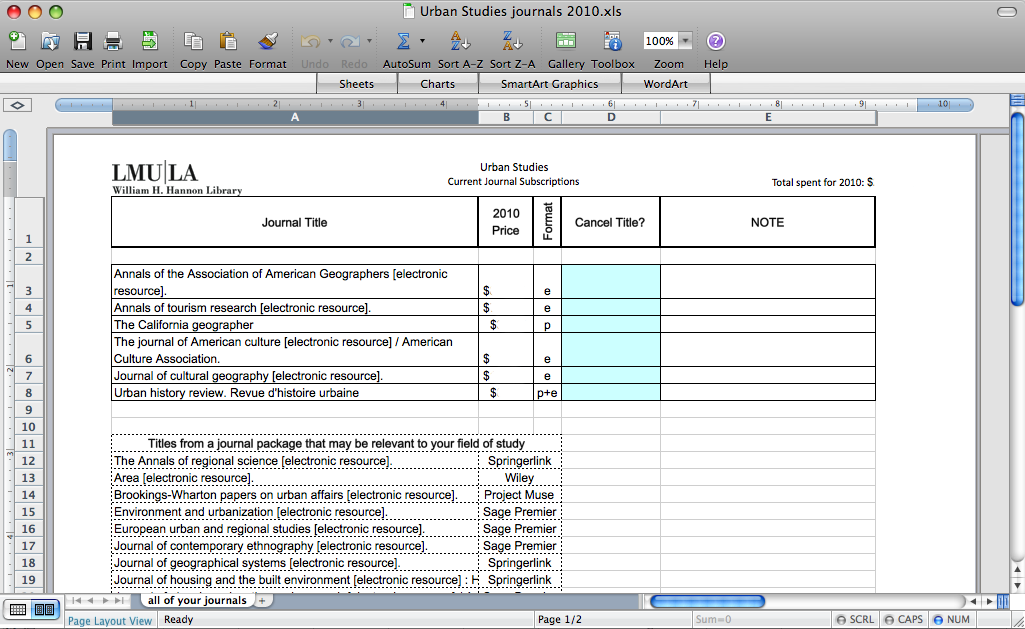
about a month ago i mentioned that we were in the midst of preparing our journal lists to send to the academic departments on campus. thanks to comments from @gohomekiki , the lists we made this year are much improved. we swapped journal lists and got good feedback from each other on how to improve our respective excel files. i’ll paste a screen shot here of what the newest version of our list looks like (prices removed). for the screen shot i chose a title list from a teeny tiny fund so it would all fit on one screen. we’ve colored the cells where we ask for feedback with that turquoise color, to make it easier for the department liaison to follow. ooh, and do you see how nice our header is? we totally stole that from @gohomekiki. i’m all for improving the lists for next year, so if you’ve got feedback then please leave a comment. if you want feedback on the way you format your own lists, send me a sample via email.
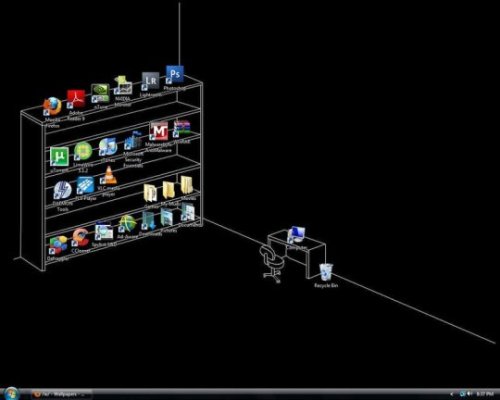
…because it was too hilarious not to try.
there are two more images linked from the daily what site that i haven’t tried yet. somehow this crudely drawn image was just the right amount of satisfying.
(thanx, the daily what!)
i casually mentioned on twitter yesterday that i was finding multiple unsigned copies of a license agreement in a single folder and got a surprise: i’m not the only one. i heard from friends on facebook that their license agreement folders are also a mess. it’s funny to me to think of libraries having anything out of order since the e-resources librarians i’ve met tend to be very neat people. i think we’ve uncovered a dirty little secret about libraries. i’m sure that what’s happened is that the people who used to be in charge of the licenses had an idea about what was important to save in those folders and as time moved on stuff was just added to the folder, weeding out nothing.
i inherited a whole file cabinet of these kinds of folders in my new job. i’m enjoying looking through them, weeding out multiple copies, fax cover sheets, and email printouts that note passwords long expired. i’m putting the leftover material in order to be scanned and eventually linked in our erms, a little procedure i cooked up many years ago. my organizational scheme is to put the current license on top, followed by any older licenses, title lists, then any correspondence that notes the administrative username/password or key contact information. all of this will be scanned into one pdf, and then i’ll create bookmarks in the pdf to point to the license start date, termination information, interlibrary loan rights and restrictions, number of simultaneous users, etc.
once in pdf form these licenses become much more meaningful as living documents because it’s easy to scan a new license and append it to the old pdf, or delete a sheet that no longer applies. also, a pdf is much easier to share with librarians that need to read them than coming to our office to request a folder.
annually we send to each academic department a list of journals to which we subscribe with funds for that department. well, we send them a list of *print* journals, and every year that list gets shorter as we move to more online-only subscriptions. this bums me out because it makes it appear that the library is annually less committed to supporting research and teaching in departments. we need a way to show our academic departments that in fact, we are expanding our support of their efforts. we came up with the following plan.
we decided to include online subscriptions in the list of journals we send to the departments. if we subscribe specifically to an online journal, it is easy to add to the list because we’ve already attached an order record and assigned a fund code in order to pay the invoice; it’s simple enough to pull those titles out of the system. the tricky part was figuring out a way to gather together all the titles that came as part of a package, for which the library – not the departmental funds – paid a lump sum.
the library subscribes to many big journal packages, several of which give us perpetual access to content. none of the thousands of these titles had order records attached to them. in essence, these titles were hidden from us because we had no way to track them; bibliographic records were ingested to the catalog but when you came across one you could never be sure why it was there or to which package it belonged.
over this past year the serials department has been attaching order records and assigning fund codes to bibliographic records of journal titles if we have perpetual access to the content. we’ve been attaching order records even if the amount we paid for that specific journal was $0 (that is, if we paid $X for the entire title list instead of an amount for each journal) so that we could assign a fund code based on the subject content of the journal. in this way we can quickly pull a list of all the journals assigned to “fund X” or “package X.” in addition to the inventory aspect of this project it allows us to gather a true title list for the departments. departmental funds may not be used to pay for access to a journal but the content is still used by a department.
our sociology department, for example, will be pleased to see a list of available journal content in their subject area go from 95 titles to 450.