The first in a series of reflections on some of the affective components of the IRDL program, things I put in place to make the Scholars feel welcomed and comfortable in the learning environment.
Fidgets (in person)
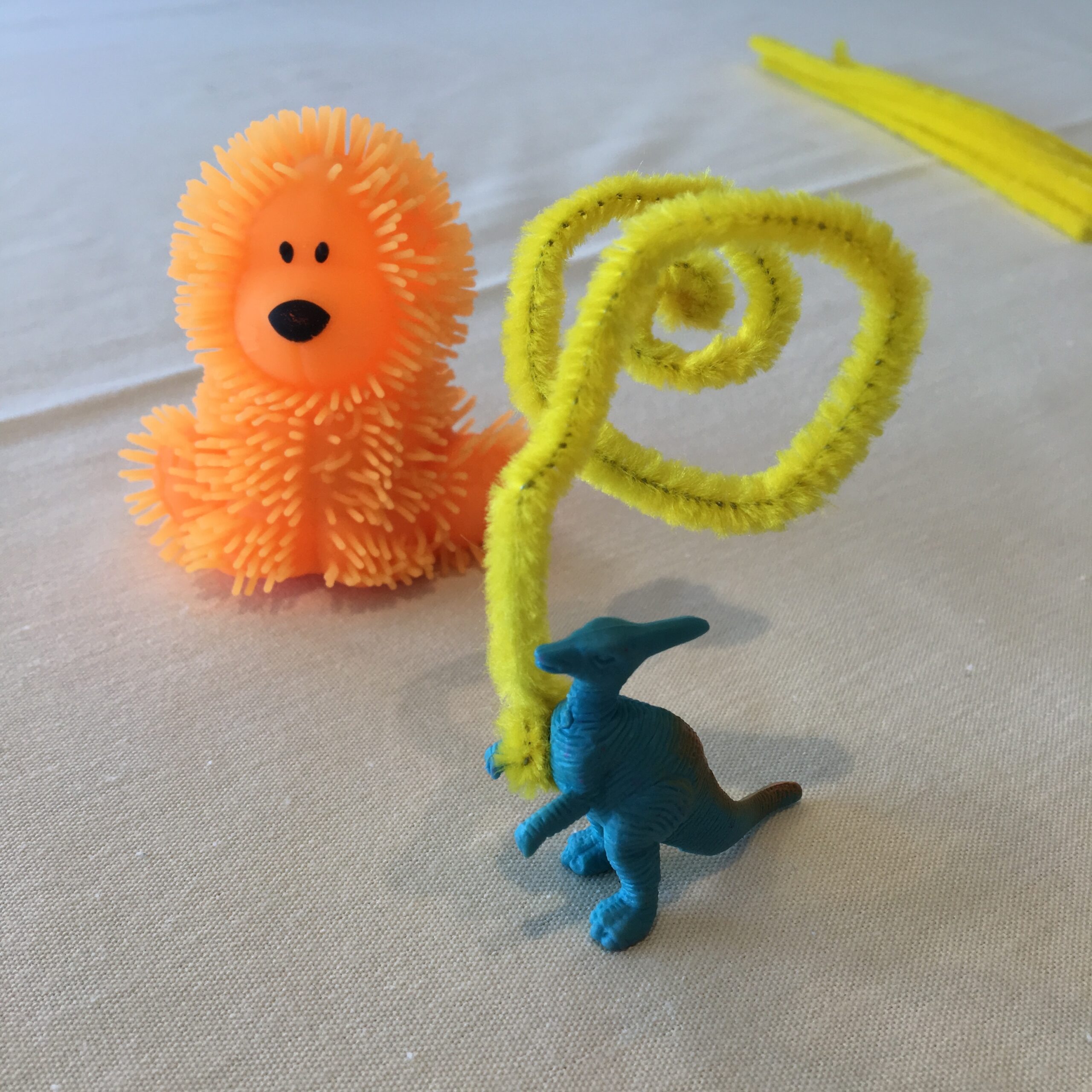
When the summer workshop was hosted in the LMU library (Los Angeles, CA) as an in-person event (2014-2019), I put a bunch of “fidgets” on each of the round tables in the training room, so that people sitting at each table could choose their own toys throughout the days to occupy their fingers during the learning sessions. I placed objects like chenille pipe cleaners in a variety of colors, squishy balls, toy cars, LEGO building blocks, crayons, coloring book pages, and small plastic animals on the tables.
At the end of each day of the workshop, I cleared the tables and reset them for the next day. As I picked up the used fidgets, I noticed that the people at the tables had cooperated in building scenes for the items found at the tables, like building a pipe-cleaner house for a plastic animal or a drawn road on several pieces of paper for the toy cars to drive on. We replaced used toys with fresh ones each day over the course of the nine-day workshop.
As we wrapped up the last day of the workshop and prepared to leave the training room for the last time, a Scholar asked if they could take their favorite fidget home with them. Clearing the tables on that last day was a breeze because they took everything. We heard from the Scholars after the workshop that the toys occupied a prized place in their work offices, as a fun memory of the workshop.
The fidgets and hands-on materials for exercises for the in-person workshop were purchased from the Dollar Store and Amazon, for a cost of around $300.
Fidgets (online)
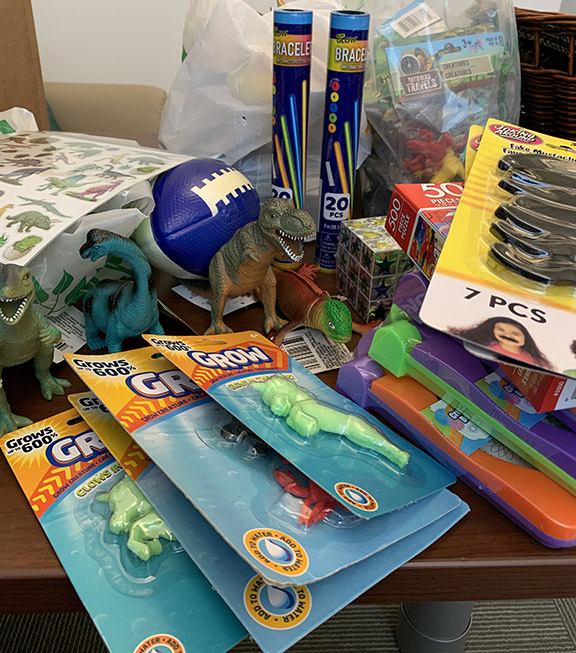
As we moved to hosting the summer workshop online via Zoom instead of in person (2022-2024), I thought through some options for fidgets, that might create a similar fun atmosphere in the new setting. I remembered back to when I was young and travelled during the summer in the car with my mom from Texas to visit relatives in Ohio, she would pack for me a little prize to open every day of the car trip. Those packages were delightful to me, and I couldn’t wait to see the prize each day (a paddle game, a can of Play-Doh, a jump rope). Keeping that delight in mind, I decided to pack a fidget for each Scholar, for each day of the workshop.
I put each fidget in a brown paper bag and folded it closed, with a sticker on the outside for the day on which the Scholar was to open the bag. I put ten bags into a box and sent it to each Scholar via UPS, with instructions not to open any bag until the first day of the workshop.
Here’s what I packed in each bag:
Open on Day 1: Four printed pages of advice from previous Scholars/Mentors, a Slinky, some pipe cleaners
Open on Day 2: building blocks, toy cars
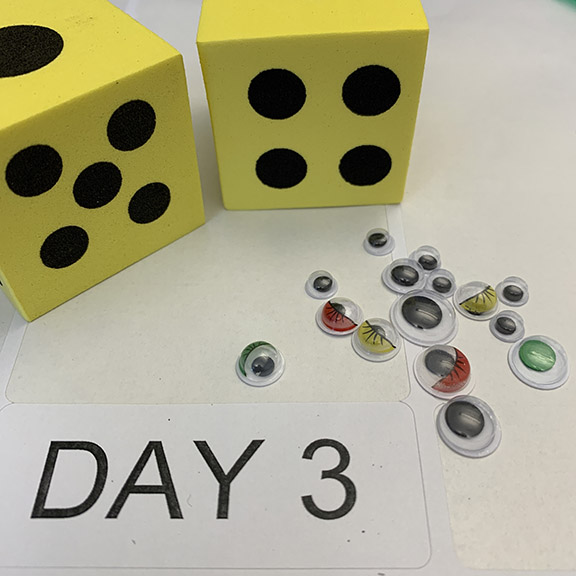
Open on Day 3: 25 google eyes, giant foam dice (these fidgets could be used during the hands-on practice with sampling design)
Open on Day 4: 2 pre-stamped IRDL postcards (one to send to a friend, one to send to a colleague they thought should apply to IRDL), LMU library sticky notes, an LMU library magnet
Open on Day 5: paper drink umbrellas, plastic sunglasses (for the “beach” theme day)
Open on Day 6: single item large toy (Nerf football, dinosaur, Spirograph)
Open on Day 7: sheets of stickers
Open on Day 8: 3 small plastic animals
Open on Day 9: 3 glow bracelets, Rubik’s cube
Open on Day 10: IRDL completion badge
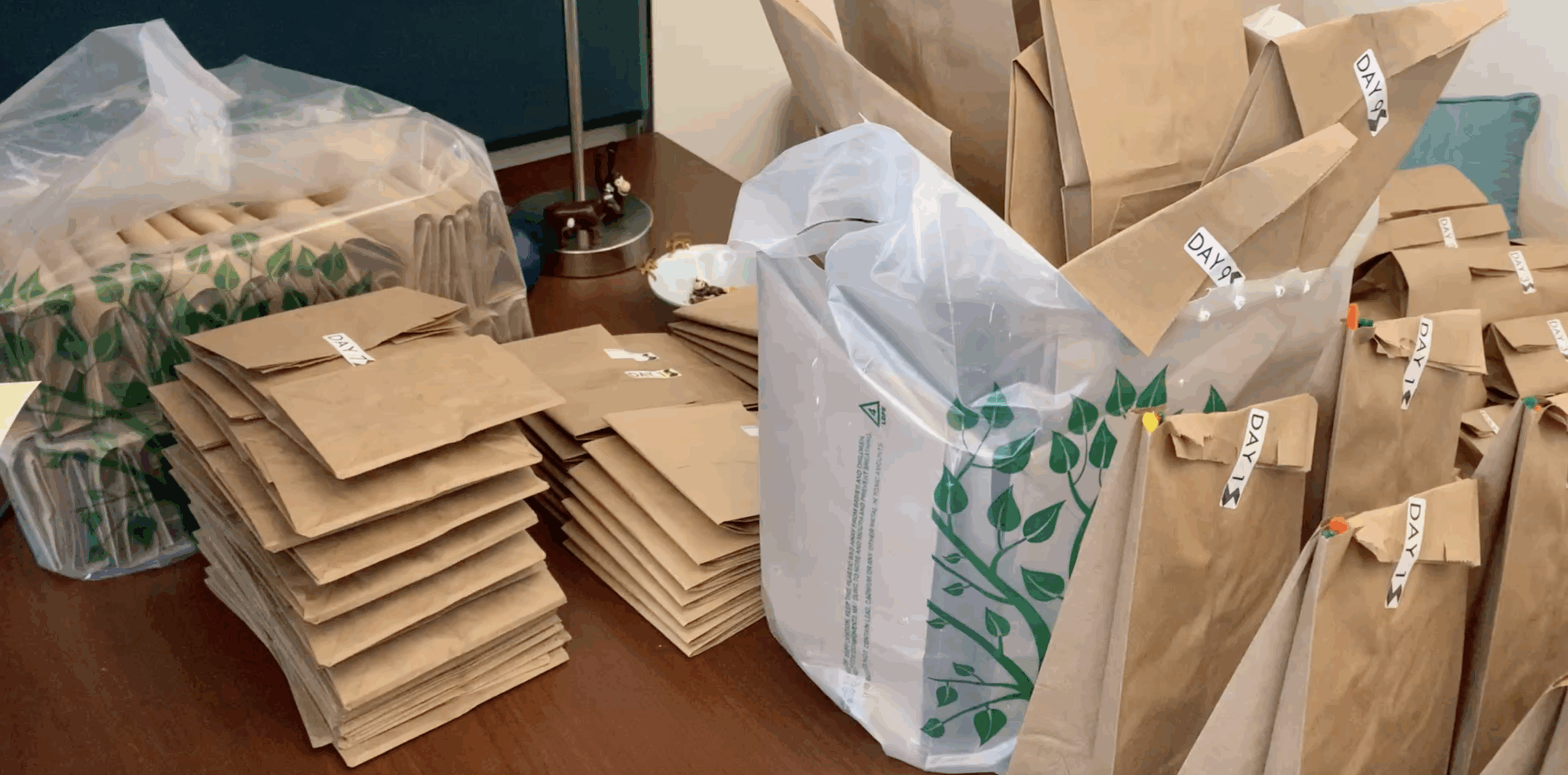
Office full of treat bags, ready to be packed and sent
The fidgets and hands-on materials for exercises for the online workshop were purchased from the Dollar Store and Amazon, for a cost of around $200. Boxes and tape to send the materials cost around $60. The library covered the cost of the mailing of the materials via UPS.