
-
This blog, written by Marie R. Kennedy, is about organization, librarianship, and sometimes monkeys and/or bananas.

Archives
Categories
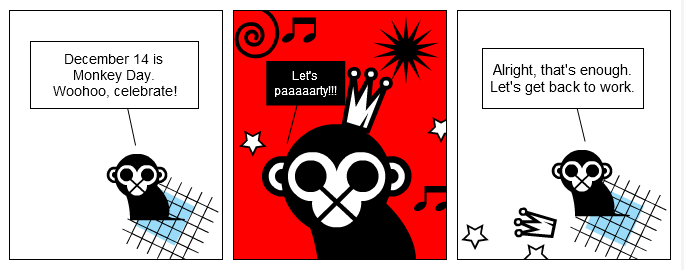
Monkey Day
Posted in comic, monkeys/bananas
1 Comment
a quick note on giving and receiving thanks
i recently asked the participants in our collaborative marketing project to e-mail me to let me know which e-resource they are planning to market. in many of the e-mails they included notes of thanks for creating the project. it happened enough that it made me kind of teary. (tears in the office! scandal!) i don’t know why it made me so emotional exactly, but i really appreciated seeing those notes.
it’s a good reminder that a simple word of appreciation can really make someone’s day.

Posted in e-resource mgmt, library, marketing
Comments Off on a quick note on giving and receiving thanks
trust in e-resources
lately i’ve been thinking a lot about trust related to e-resources, and that whether an e-resource “just works” or “is broken” affects our patrons’ perceptions of the library. we know from e-commerce that if a buyer has a poor experience with an online user interface she is likely not to shop on that site again. that concept should easily translate to how a patron interacts with a library website — if it doesn’t work the way she expects, she’ll find her information somewhere else.
ask any librarian if this is acceptable and they’d say, “no,” but it happens all the time. look at the proquest rollout of their new platform. we saw it demonstrated in april of 2010, migrated to the new platform in december of that year, and then promptly migrated back to the old platform when our patrons reported major problems with it. it’s almost a year later and bugs are still being reported. how is this acceptable to any library?
i didn’t expect that the role of an e-resource librarian would be about advocacy but i’m finding more and more of my job is pointing out (mostly politely) to resource providers when their interfaces stink, are not ADA-compliant*, or have errors in the data we get from them. this is an increasing part of my job because the data streams we get from third parties is growing — we now have at least five different ways to get e-book content into our system, for example. if one of those streams goes wonky (technical term) i’d like to find it and report it to our content providers before our patrons do, but i’m only one person and can’t manage that kind of control on all of our data streams. the effect of this is that our patrons find the problems first, and that breaks their trust with us. i don’t want that, and i don’t think any librarian finds it acceptable, but that’s where we are now. until our data providers know that data integrity is critical it won’t be their priority.
and then i saw this, which drives my point home but also made me chuckle:

(screen capture from http://shitmystudentswrite.tumblr.com/)
* if you are an e-resources librarian and care about ADA compliance in the resources that your library licenses on behalf of its patrons, consider suggesting the addition of the following clause to the licenses you negotiate:
Compliance with Americans with Disabilities Act. Licensor shall comply with the Americans with Disabilities Act (ADA), by supporting assistive software or devices such as large print interfaces, voice-activated input, and alternate keyboard or pointer interfaces in a manner consistent with the Web Content Accessibility Guidelines published by the World Wide Web Consortium’s Web Accessibility Initiative, which may be found at http://www.w3.org/WAI/GL/#Publications.
Posted in e-resource mgmt, license agreements, management, titter
Comments Off on trust in e-resources
book status: nearing completion
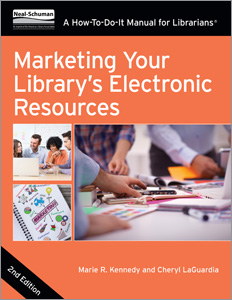
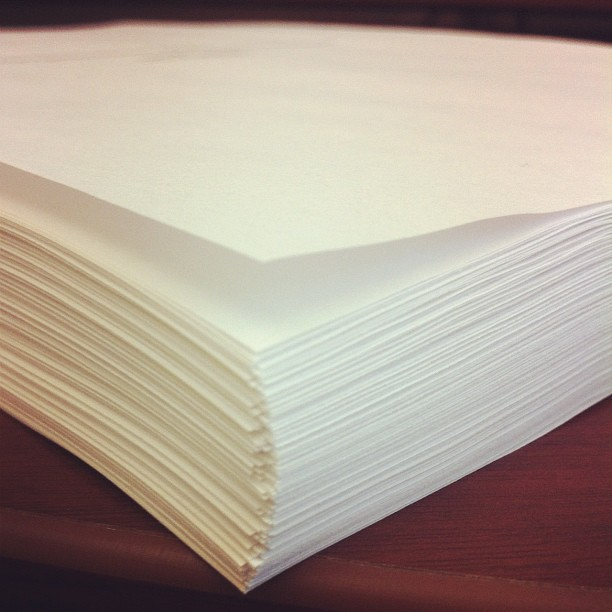
in june i started writing a book with cheryl laguardia, a how-to manual for marketing electronic resources in libraries. it’s not done yet, there’s still writing to do, but today is the first day i printed it out. i’ve worked exclusively on the computer so far and wanted to see what it felt like to actually hold all those words in my hands. it felt pretty good. 🙂
Posted in e-resource mgmt, library, marketing, writing
Comments Off on book status: nearing completion
Alternate kinds of “use” of electronic journal articles
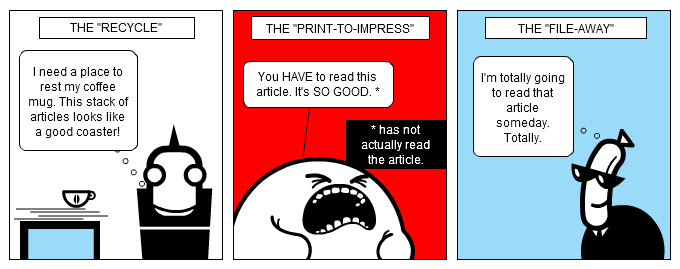
Libraries typically use the COUNTER standard to count the “use” of e-content, but we know there are other ways to describe a use. This comic shows three alternatives.
Posted in comic, e-resource mgmt, library, metadata, titter
Comments Off on Alternate kinds of “use” of electronic journal articles
College Students, Libraries, Technology, Crunch Time: The Latest PIL Report
what a rich study this is! i’m still digesting it myself. i’m pasting below a quote that is leading me to wonder about services the library can provide while the students stay put in the library to study.
Head, Alison J., and Michael B. Eisenberg. 2011. “Balancing Act: How College Students Manage Technology While in the Library during Crunch Time.” Project Information Literacy Research Report. Accessed October 12, 2011 http://projectinfolit.org/pdfs/PIL_techstudy_Fall2011_noappendices1.1.pdf.
found via cheryl’s blog: http://blog.libraryjournal.com/eviews/2011/10/13/college-students-libraries-technology-crunch-time-the-latest-pil-report/
“Moreover, students told us they stayed online and in close proximity to their work. They did not get up from their seats, ask for help from a librarian, or use most library resources; indeed their most valuable devices run the risk of being stolen if left unattended. Nor do they leave their online worlds, where their most alluring self-incentives are” (p.48).

Posted in library
Comments Off on College Students, Libraries, Technology, Crunch Time: The Latest PIL Report