
-
This blog, written by Marie R. Kennedy, is about organization, librarianship, and sometimes monkeys and/or bananas.

Archives
Categories
Friday fun: Banana sharpener
Posted in monkeys/bananas
Comments Off on Friday fun: Banana sharpener
license review: it’s what i do
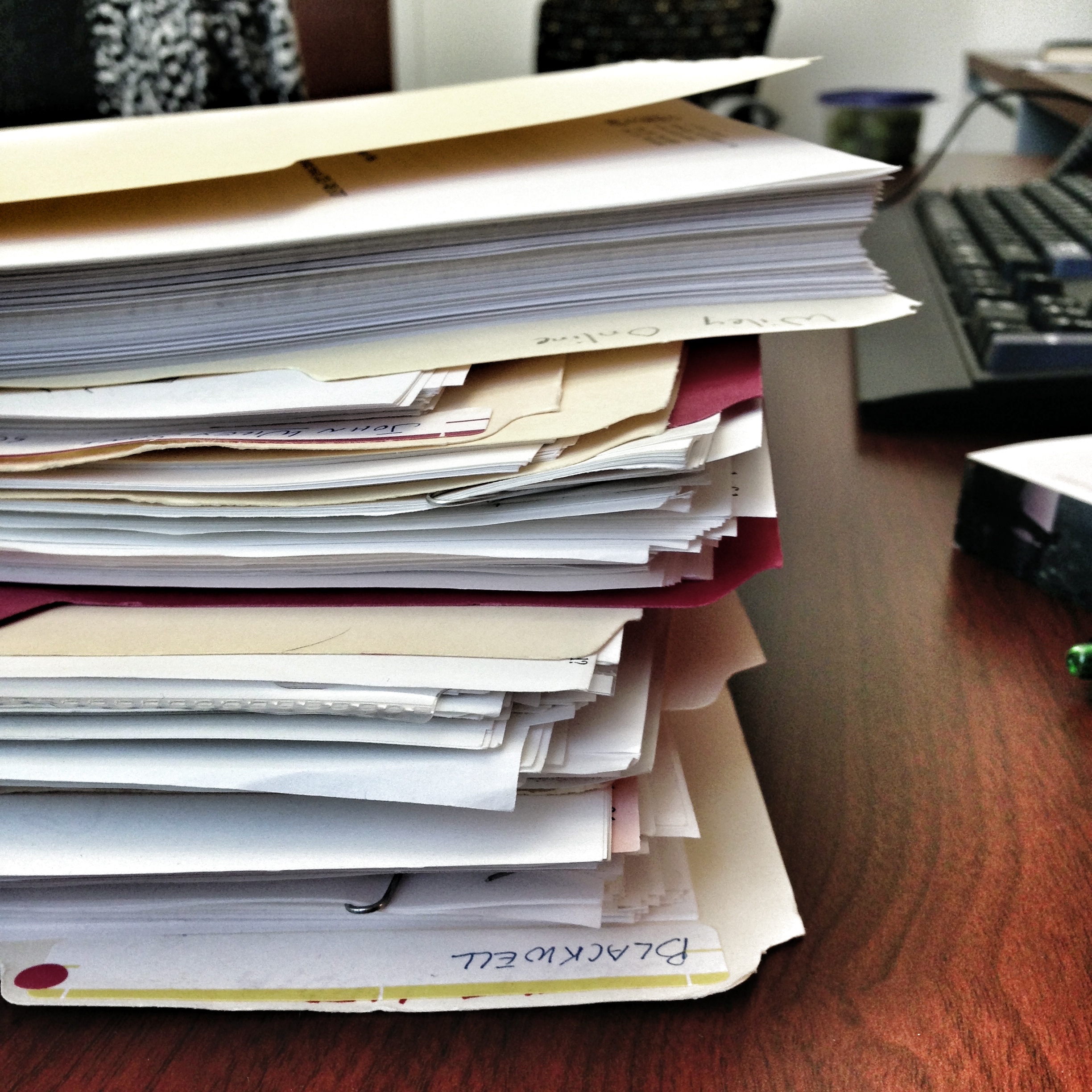 Over the last couple years I’ve been working my way through our file cabinet of license agreement materials, to see what is relevant to keep and what can be discarded. To demonstrate what an onerous process it is I thought I’d show you the folders I’ll be looking through to organize our Wiley electronic subscriptions and purchases. Looks like we’ve got some stuff back from before the merger with Blackwell. Once the relevant material is gathered, organized by date (most current info on top), we’ll scan this license pile, save it to a web server, and link a URL to our resource record. I’ll translate the current license rights/restrictions for our patrons in a license record in our ERM. I wonder how many cups of coffee this one pile will require!
Posted in e-resource mgmt, license agreements
Comments Off on license review: it’s what i do
Marketing Your Library’s Electronic Resources (MSU LEETS presentation)
I’ll be attending the MSU LEETS summit this week. Here is a link to the slides of my presentation:
Posted in e-resource mgmt, marketing
Comments Off on Marketing Your Library’s Electronic Resources (MSU LEETS presentation)
this is my relieved face: *_*
This weekend I tested authentication access to all of our databases from outside the campus IP range, using the new proxy server. It went surprisingly well. I uncovered eleventy subscription/title problems, but the new proxy server seems to work very well.
I changed the snippet in SerialsSolutions today, Sunday. That change will run overnight, so tomorrow our patrons who use the A-Z Journal List will be accessing all our journals through the new server. SerSol is going to send us a new file of e-journal holdings with corrected URLs tomorrow, and we’ll load those tens of thousands of records into the system so that the URLs in the catalog match the A-Z list.
We’ll manually change the URLs for our 300 databases tomorrow as well, one by one.
And then, once those chores are done, we’ll put on our princess dresses and go to the ball!
Posted in e-resource mgmt
1 Comment
e-resources usage stats dashboard
“A dashboard is a visual display of the most important information needed to achieve one or more objectives: consolidated and arranged on a single screen so the information can be monitored at a glance” (Few, p.34).
Wow, there are some really unattractive dashboards out there. When we were wondering if we should make a dashboard for all of our e-resource usage stats and charts we did a Google search to see what we could crib from. Word of advice: if you’re thinking about creating a dashboard and you’re not well-versed in visual design, check this book out before you get rolling: Few, Stephen. 2006. Information Dashboard Design: The Effective Visual Communication of Data. O’Reilly: North Sebastopol, CA.
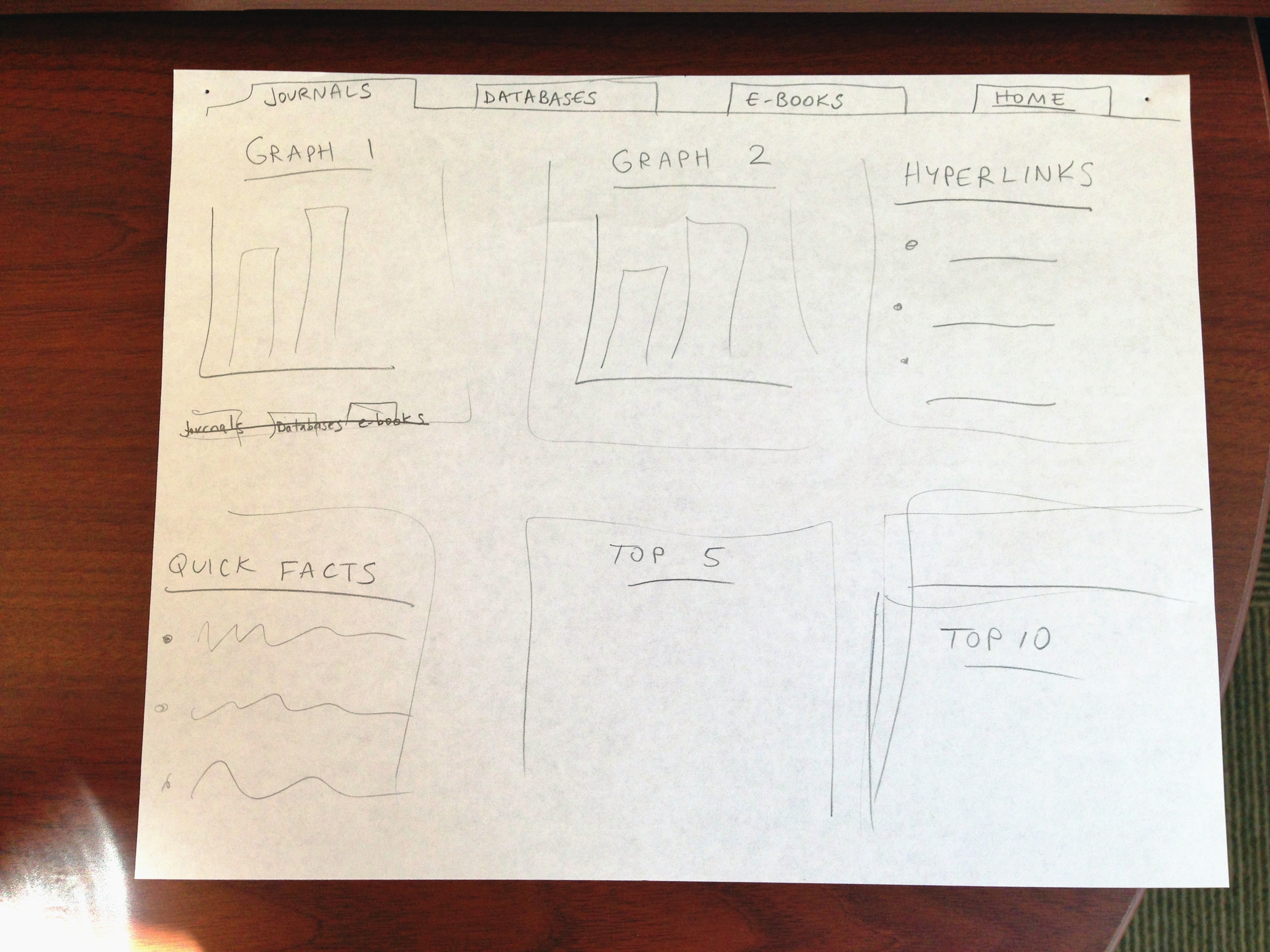
We’re at the point now of deciding what will be stored in and linked from the dashboard, as well as what format it will take. We’re considering a wiki-based design, web-based, LibGuide (which is web-based but v. customizable), and a simple Excel dashboard.
Here’s a visual draft of what we’re thinking about now. Stay tuned for more!
Posted in e-resource mgmt
3 Comments
One good thing about asking the question
…is that you’re gonna get an answer!
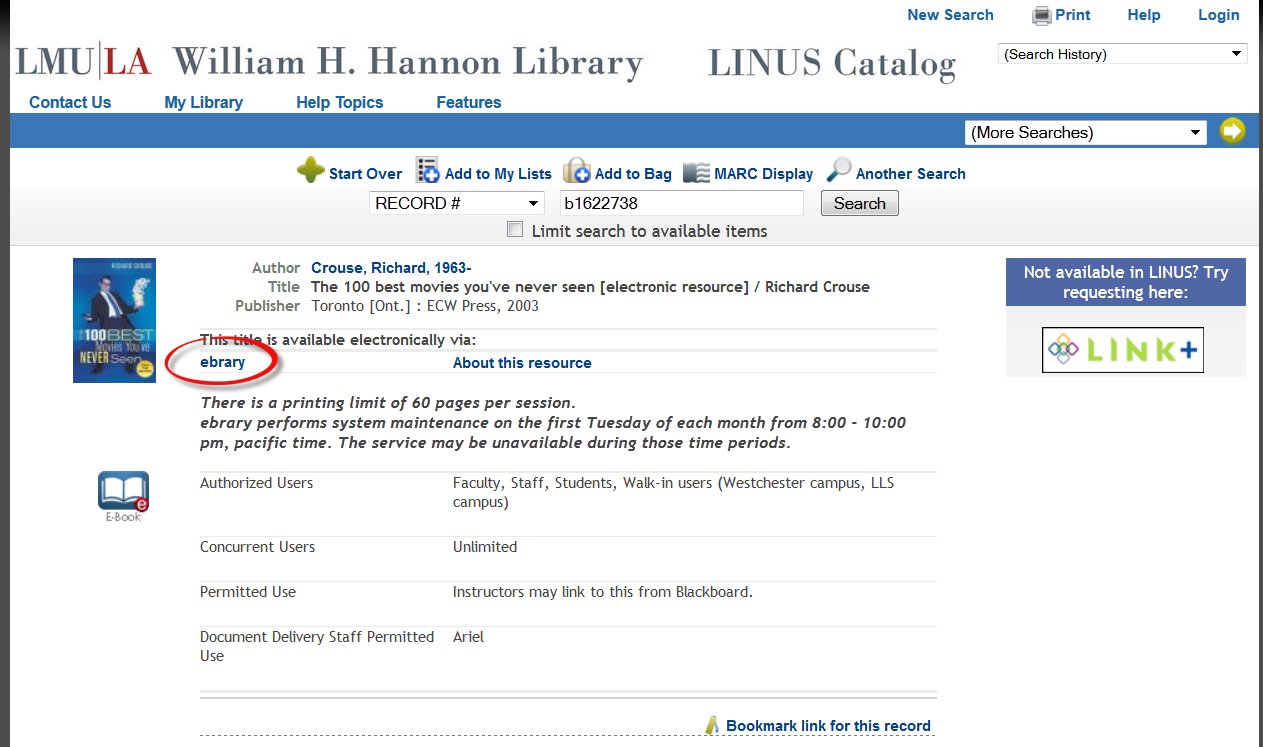
Librarians who serve our patrons at service points are THE people to stay in touch with if you’re thinking about how to improve your library’s electronic resources. I stopped by the Info Desk to chat with the librarian there today and she mentioned what a drag it was to have the link one clicks on to get to an e-book look so nondescript. People never know where to click. Look at the image I’ve put here. Why would anyone ever think that clicking on “ebrary” would take them to the e-book? It’s ridiculous. It’s also already on the list of things to discuss library-wide, to come to some consensus about how it should look, and what the link should say. I reminded the librarian that this was definitely on the list of things to correct.
Then I asked, “What else ya’ got?” And guess what? The librarian had more ideas about what to change, how things might work better for our patrons. How awesome is that? My take-home of the day is to keep asking that question.
Posted in e-resource mgmt
Comments Off on One good thing about asking the question